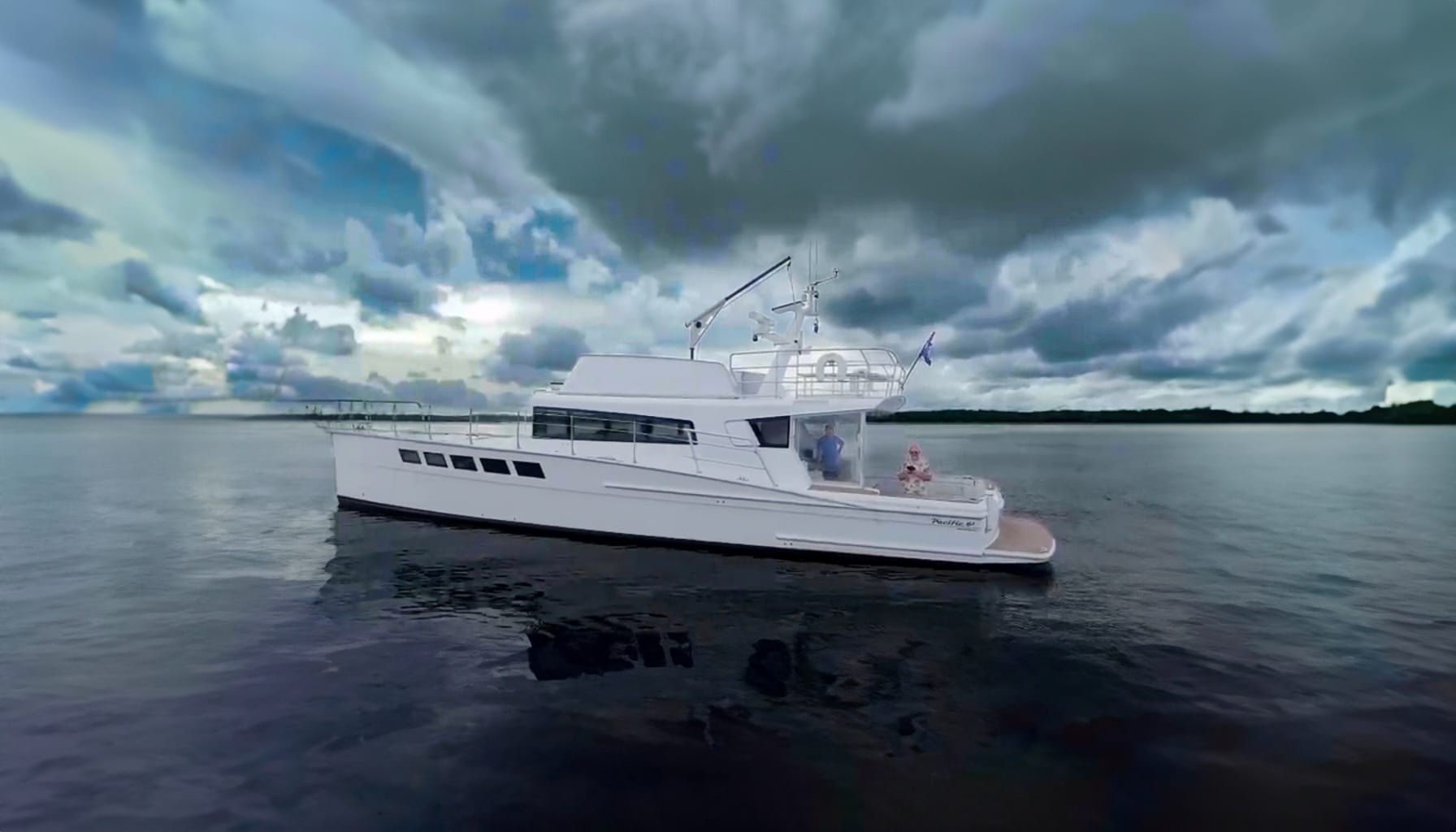

Yacht Delivery Solutions were engaged to deliver a Dickey Boats Pacific 62 motor yacht from North Queensland to Bali, following an earlier delivery from Opua to Australia. This passage involved transiting the Queensland coast, Torres Strait, and Darwin before continuing offshore to Indonesia, and provides a practical example of how a long-range power yacht of this type is managed in real operating conditions.
After transiting the Torres Strait and working across the top end, the delivery proceeded into Darwin for fuel, provisioning, and international clearance.
Darwin is a logical staging point for vessels heading into Indonesia. It provides access to reliable fuel, established customs procedures, and the opportunity to prepare the vessel properly before an international passage.
At Cullen Bay, the vessel took on approximately 3,600 litres of diesel, bringing total fuel capacity back up to around 4,400 litres. This ensured full range for the passage to Bali, removing any reliance on refuelling prior to arrival.
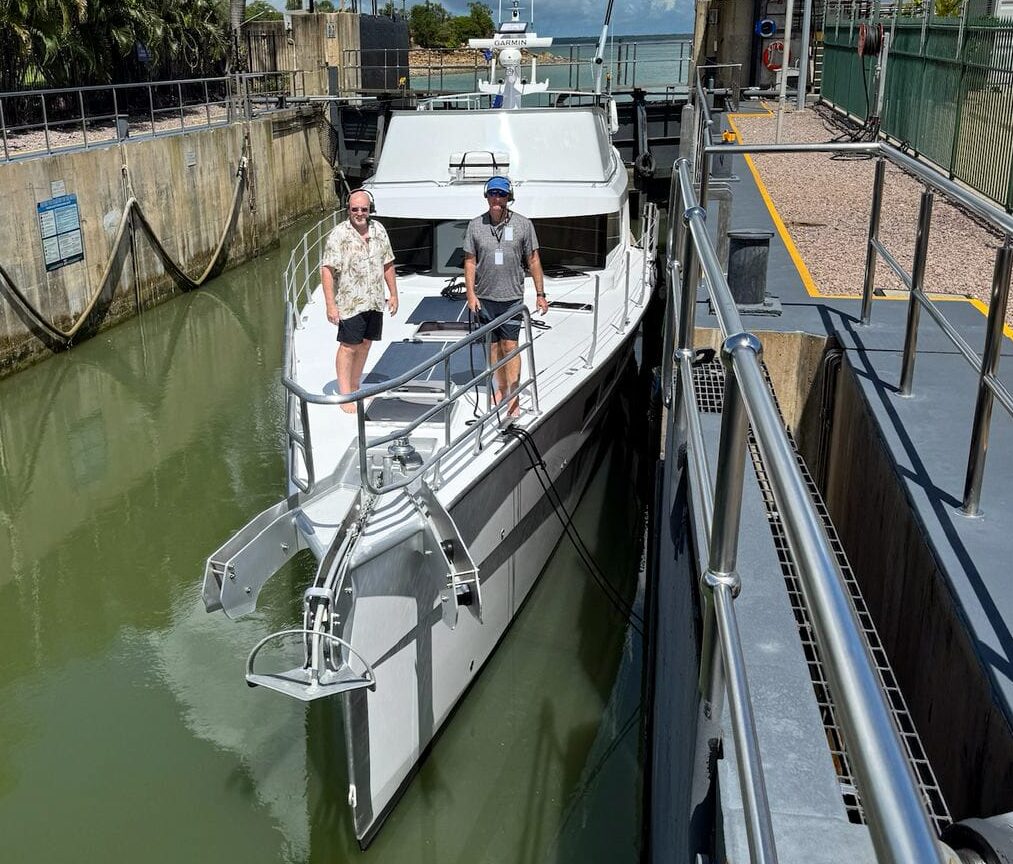
Cullen Bay Marina operates via a lock system, requiring vessels to pass through controlled water levels before entering the marina basin. First-time entry involves a short induction process, followed by transit through the lock. While straightforward, this adds an additional operational step that must be factored into arrival and departure timing.
Once secured in the marina, standard turnaround tasks were completed: waste disposal, full reprovisioning, and system checks ahead of departure.
Clearing out of Australia is a structured but relatively efficient process when handled correctly.
Prior to arrival in Darwin, documentation was prepared and submitted to Australian Border Force (ABF), including:
On departure, the vessel moved to the quarantine dock where ABF officers attended onboard. The inspection process included verification of documentation and a physical check of the vessel.
Once cleared, an official clearance certificate was issued. This document is critical, as it is required for entry into the next country. Without it, vessels risk delays, fines, or refusal of entry on arrival.
At the same time, coordination was underway with an Indonesian agent to manage arrival formalities in Bali, including marina booking and domestic cruising permits for the vessel’s onward use in the region.
Before departing Darwin, full system checks were carried out.
This included:
On a vessel operating continuously offshore, these checks are not optional. They are part of standard operating procedure before committing to the next leg.
Even small mechanical issues identified at this stage can prevent significantly larger problems once offshore.
The passage from Darwin to Bali is typically a straightforward open-water run, but it comes with its own operational considerations.
Conditions during this leg were generally favourable, allowing consistent cruising speeds and strong daily runs. At times, 24-hour distances exceeded 230 nautical miles, reflecting stable sea states and efficient vessel performance.
However, this region presents specific navigational challenges:
Fish Aggregating Devices (FADs) are common throughout Indonesian waters. These are anchored structures, often in very deep water, used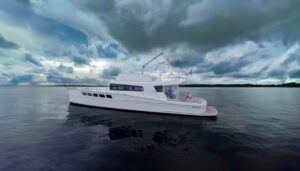 by local fishing vessels. They can be difficult to detect, particularly at night, and require careful watchkeeping.
While AIS usage is improving among regional fishing vessels, it remains inconsistent. Some vessels may only activate AIS intermittently, meaning radar and visual watch remain essential.
Although conditions were largely stable, isolated storm activity and electrical systems can develop quickly. Squalls and lightning are common and require ongoing monitoring even in otherwise calm conditions.
During the offshore leg, standard watchkeeping procedures were maintained to ensure continuous monitoring of:
With a small professional crew, maintaining a structured watch system is essential to manage fatigue while ensuring constant situational awareness.
Engine checks and fuel system monitoring continued throughout the passage, particularly given the reliance on consistent fuel supply over multiple days of continuous operation.
Arrival into Bali requires precise timing.
Benoa Marina operates with restricted access and does not allow uncontrolled entry. The marina entrance is physically closed and must be opened by staff, typically within limited operating hours.
This creates a practical constraint: arrival timing must align with marina availability. Missing the entry window can result in having to anchor offshore in a congested and commercially active harbour environment.
On this passage, maintaining speed became a factor in arrival planning. A consistent cruising speed was required to reach the marina before closure, avoiding the need to hold position overnight.
The vessel arrived at Benoa Marina shortly before closing, allowing direct entry without delay.
Following arrival, the vessel remained alongside pending formal clearance into Indonesia the following day. As with departure, arrival procedures are documentation-heavy and typically managed in coordination with a local agent.
This passage reinforces several key points relevant to long-range yacht deliveries:
For vessels like the Dickey Pacific 62, these systems and considerations are what enable safe, efficient long-range operation in real-world conditions—not just theoretical capability.